
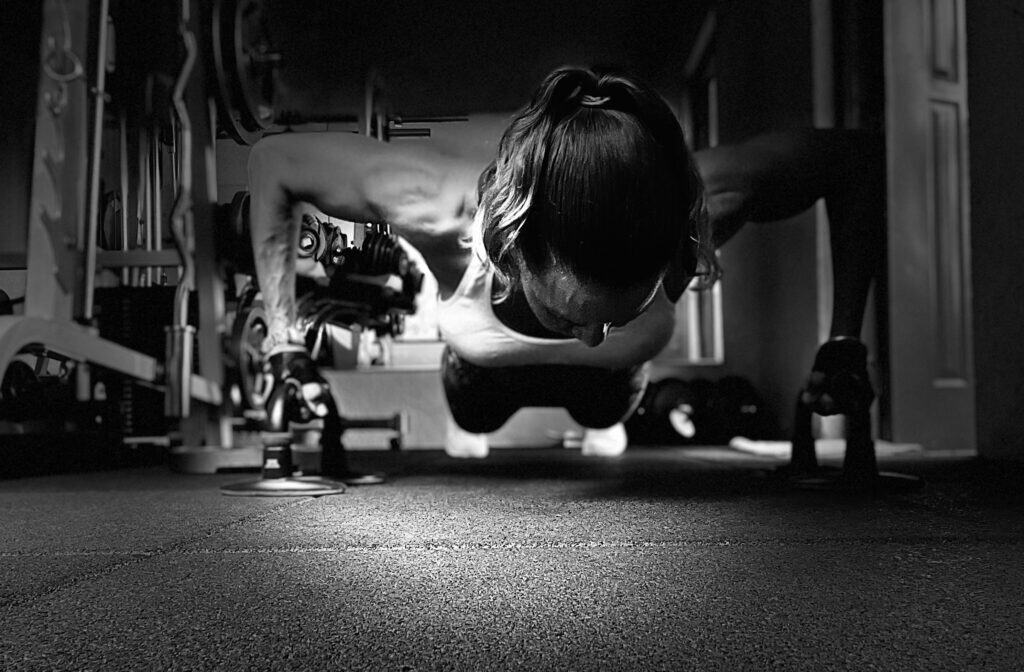
If your knees make a noise when you stand up, it does not automatically mean your joints are falling apart. It may mean you stood up. Bodies make noise. Just telling it like it is.
Still, plenty of women over 50 worry that lifting weights will damage their knees, hips, shoulders, or back. So they avoid strength training, stick to whatever movement feels “safe,” and hope their joints will sort themselves out.
That is not a great plan.
For most people, appropriately chosen and gradually progressed strength training is safe for joints. It can build the muscles that help support movement and make everyday tasks easier. Avoiding all resistance because you are worried about your joints can also leave you less strong and less prepared for the physical demands of daily life.
The answer is not to grit your teeth through pain or grab the heaviest dumbbells in the room. It is to train with a plan that suits your body.
Does lifting weights wear out your joints?
For most people, no. Strength training does not automatically grind down your joints. Age alone is not a reason to avoid it, and even people with osteoarthritis are often encouraged to stay physically active. The CDC’s guidance on physical activity and arthritis explains that appropriate activity can help reduce arthritis pain and improve function.
Muscles help you produce and control movement. Building strength can make tasks such as climbing stairs, getting up from a chair, carrying groceries, and lifting a suitcase feel more manageable. It also gives you more capacity for the ordinary surprises of life, like hauling a bag of shopping that was supposedly “just a few things.”
That does not mean every exercise is right for every person, or that more weight is always better. It means the goal is to find a suitable level of challenge and build from there.
Why do joints feel different after 50?
Midlife can bring changes in strength, recovery, sleep, activity levels, and how your body feels day to day. Perimenopause and menopause may be part of the picture, but they do not make you fragile or cancel your ability to get stronger.
Previous injuries, chronic pain, osteoarthritis, and long stretches without regular movement can all affect what feels comfortable. A deep squat may not be the best starting point for someone whose knee is irritated. A different squat depth, a sit-to-stand, or another variation may work better.
This is where good coaching matters. Training should respond to the person in front of the coach, not to a generic workout that assumes everyone has the same joints, history, schedule, and tolerance for nonsense.
What pain should you pay attention to?
Some muscle fatigue and next-day soreness can happen when you start a new programme or increase your workload. That is different from repeatedly pushing through sharp, worsening joint pain.
Pay attention to symptoms such as significant swelling, a joint that locks or gives way, pain that keeps getting worse, or symptoms that remain noticeably aggravated after a session. If you have a new injury, persistent pain, or uncertainty about what is going on, speak with a qualified healthcare professional. A personal trainer can adjust exercise, but should not diagnose an injury.
A practical rule: if a movement consistently makes a joint feel worse during the session or afterwards, do not keep forcing the same version. Reduce the range, load, speed, or number of repetitions, or use a different exercise. “No pain, no gain” is not a medical assessment. It is an old slogan that has had a remarkably long career…Uff.
Weight Training for Beginners Over50: Start with a sensible dose
If you are new to lifting, your first goal is not to prove how tough you are. It is to learn movements you can perform with control and repeat consistently.
A sensible start might include:
- Two strength sessions a week. Keep the schedule realistic; consistency matters more than a heroic first week.
- A few basic movement patterns. For example, a squat or sit-to-stand, a hip hinge, a row, a press, and a carry.
- A manageable range of motion. Start where the movement feels controlled and comfortable. Range can develop over time.
- A light-to-moderate resistance. Choose a load that lets you practise good technique without straining or rushing.
- Gradual progression. When your current version feels manageable, add a repetition, a little resistance, or a small amount of range, not all three at once.
This is the unglamorous part that works. You do not need to turn every workout into a test of character. The aim is to challenge your muscles while keeping the movement controlled.

Strength Training for Women 40+ should be adaptable
The best exercise is not the one that looks impressive on social media. It is one you can do safely, consistently, and progressively.
If a traditional squat bothers your knee, you might try a sit-to-stand from a higher chair or use a smaller range. If holding dumbbells aggravates your wrists, a different grip or resistance option may be more comfortable. If overhead pressing bothers your shoulder, your programme can use another pressing angle while you work on strength and mobility.
Modifying an exercise is not cheating. It is how training becomes useful rather than something you dread.
And strength training should not be reduced to isolated arm curls and endless “toning” routines. Functional Strength Training for Women includes movements that build capacity for real tasks: standing up, reaching, carrying, stepping, lifting, and controlling your body through different positions. The training should fit the person, not the other way round.
What about pain or an old injury?
Having a history of joint pain does not automatically rule out resistance training. It does mean your starting point and exercise choices need attention. The Arthritis Foundation’s guidance on exercise and strength training with arthritis also emphasizes choosing activity that suits your ability and adjusting when symptoms flare.
Start with movements you can control. Notice how you feel during the exercise and later that day. If symptoms are worse than usual, change one variable at a time: load, range, repetitions, or exercise choice. If you have a specific diagnosis or a recent injury, coordinate your training with your healthcare provider or physical therapist.
At TheFitLifeJa, Nadine Warner brings more than 20 years of ISSA-certified training experience to coaching. Plans are customized around injuries and physical limitations, rather than assuming everyone should follow the same workout. That practical approach is part of Fitness Coaching For Midlife Women: a plan that fits your needs and your real schedule.
For a group option, Wake Up With Weights combines strength work with a supportive class environment. If you prefer individual attention, private coaching can help tailor exercise choices and progression to your starting point.
Avoiding movement is not joint protection
When a joint is sore, it is understandable to want to rest it. Short-term adjustments can be sensible, especially during a flare or after an injury. But avoiding all strength work indefinitely can leave you with less strength and confidence for daily movement.
You do not need to train through a flare. You do not need to lift heavy on day one. But you also do not have to treat every ache as proof that movement is dangerous. Sometimes the right response is a lighter load, a smaller range, or a different exercise, not giving up on strength altogether.
If you are already training and wondering what to adjust, you may also find our post on getting stronger but not losing fat after 50 useful. Different question, same principle: a good plan is built around what your body is actually doing, not a guess or a panic.
Your practical takeaway
Pick two strength sessions you can realistically fit into your week. Choose a few controlled movements, start at a manageable level, and track how your joints respond. If an exercise repeatedly aggravates a joint, modify it and seek professional guidance when needed.
You are not too old to get stronger, and a sensitive joint does not mean your only option is to avoid weights. Train intelligently, progress gradually, and make adjustments when your body gives you useful information.
That is how we build strength that supports real life. Effort Never Ends, but it should be informed effort.