If you’ve spent any time on social media lately, you’ve probably seen fitness influencers power-walking through suburban neighborhoods looking like they’re about to be deployed on a tactical mission. The weighted vest has become the latest "must-have" accessory for women over 40.
The marketing usually goes something like this: "Wear this vest while you do the dishes or walk the dog, and watch your bone density soar!"
It sounds convenient. It sounds easy. And usually, when something in fitness sounds like a convenient shortcut, my "nonsense" alarm starts ringing.
As a coach who has been in this game for over 20 years, I’ve seen every gimmick from vibrating platforms to detox teas. When we talk about bone health, especially for women navigating the hormonal rollercoaster of perimenopause and menopause, we don't have time to play around with things that don't work. Your bones are literally the framework of your life. If the foundation is crumbling, it doesn't matter how nice the paint job looks.
So, let's look at the actual science of weighted vests versus traditional strength training. Is one better, or are we just buying more gear to clutter up the closet?
Why Your Bones Are Suddenly Feeling "Drama"
Before we compare the tools, we have to understand the problem. Once you hit 40, your estrogen levels start to dip. Estrogen isn't just about your mood or hot flashes; it’s a key player in bone remodeling. It tells your body to keep building bone and to slow down the breakdown.
When estrogen leaves the building, your bone-breaking cells (osteoclasts) start working overtime while the bone-building cells (osteoblasts) decide to take an unscheduled sabbatical. The result? Bone density drops, and the risk of osteopenia and osteoporosis skydives into your reality.
Your bones aren't "bad." They’re just filing complaints after years of being treated like fine china that never gets used. To keep them strong, you have to give them a reason to stay. You have to apply stress.

The Weighted Vest: The "Maintenance" Crew
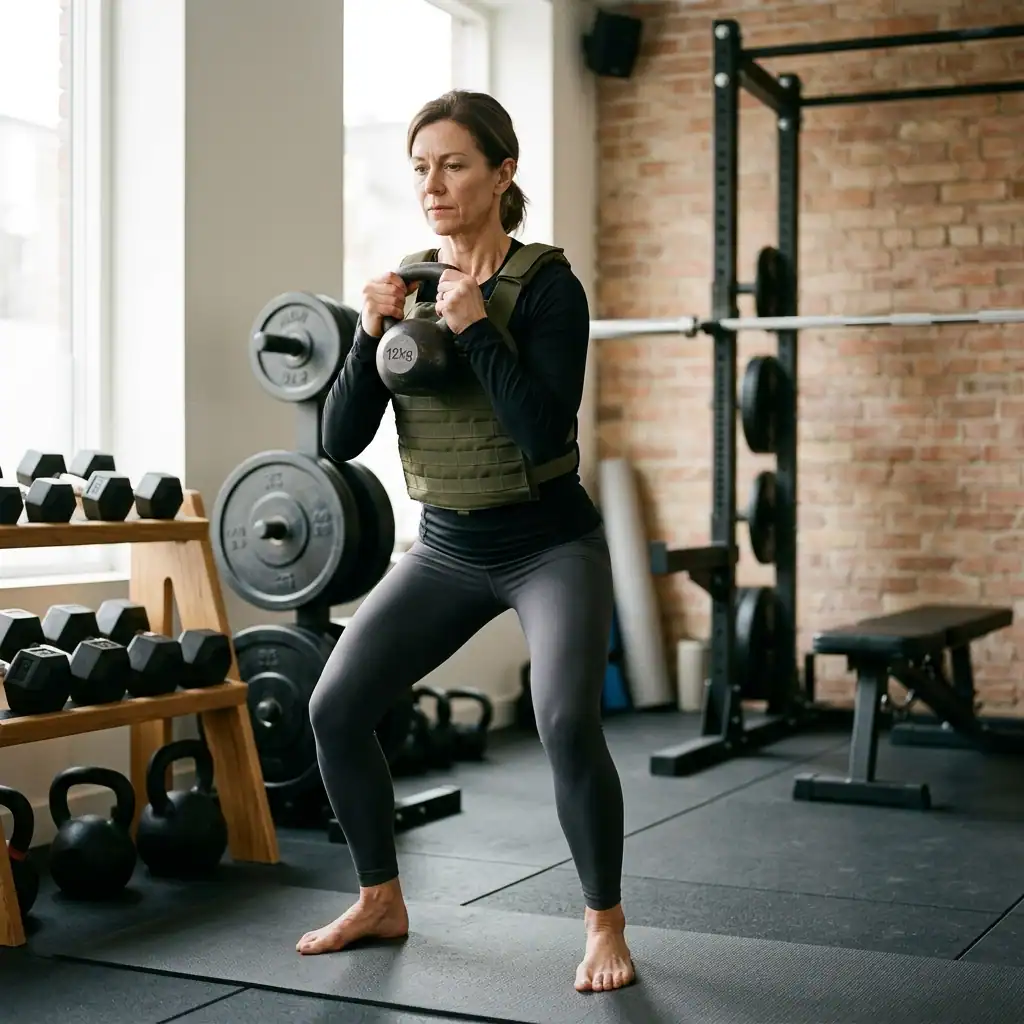
The theory behind the weighted vest is simple: increased loading. By adding 5lb, 10lb, or 20lb to your frame, you’re forcing your skeletal system to carry more weight than it’s used to.
Research shows that weighted vests can be quite effective at maintaining bone density. This is especially true if you are currently losing weight. When you lose body mass, your bones often decide they don't need to be as strong because there’s less of you to carry. A vest can trick your body into thinking that weight is still there, preventing the "unloading effect."
However, there’s a catch. Walking in a weighted vest is still just walking. Most vests only add about 5–10% of your body weight. While that’s better than nothing, it’s a modest increase in force.
Buying a weighted vest before you’ve mastered basic movement patterns is like putting expensive rims on a car with no engine. It looks the part, but it’s not going anywhere fast. If you’re wearing a vest but your gait is a mess or your knees are screaming because you lack the muscle to support the extra load, you’re just inviting an injury to a party it wasn't invited to.
Strength Training: The "Construction" Crew
If the weighted vest is about maintenance, strength training is about high-level construction.
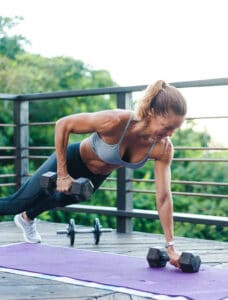
When you pick up a heavy dumbbell or a barbell, you aren't just adding a little bit of weight to your walk. You are creating intense mechanical tension. When a muscle pulls on a bone during a heavy lift, like a squat, a deadlift, or an overhead press, it sends a loud, clear signal to the bone: "Hey! We’re under pressure here! Get stronger or we’re going to break!"

This is called Wolff’s Law. Bone grows in response to the loads placed upon it.
The difference between a vest and a deadlift is the magnitude of the force. A weighted vest is a consistent, low-level hum. A heavy strength training session is a megaphone. Study after study shows that supervised resistance training provides the strongest "bone-building signal" for older adults. It doesn't just slow down the loss; in many cases, it can actually help increase mineral density.
The Comparison: Which Wins?
Let’s be direct: If you had to choose only one for the rest of your life to save your hips and spine, strength training wins.
Here’s why:
- Versatility: You can progressively overload a barbell almost indefinitely. You can only add so much weight to a vest before you look like an overstuffed turtle and ruin your posture.
- Muscle Connection: Strength training builds the muscle that protects your joints. A weighted vest just adds pressure to them.
- Metabolic Spark: Building muscle through lifting helps manage the "menopause middle" far more effectively than extra weight on a stroll.
However, I’m not saying you should throw the vest in the trash. It’s a great supplement. If you’re already doing your 2–3 days of heavy lifting and you want to make your daily walk a bit more challenging, go for it. But don't mistake "wearing a vest while folding laundry" for a legitimate strength program.
The "Effort Never Ends" Reality Check
I see a lot of women looking for the "gentlest" way to protect their bones. I get it. You’re tired, your joints feel like they need a shot of WD-40, and the idea of lifting a heavy kettlebell feels intimidating.
But here’s the truth: Your bones don't care about your feelings. They care about physics.
Doing random, "light" workouts every week is like rearranging furniture and calling it construction. You might feel productive, but the structure hasn't actually changed. To see real changes in bone density after 40, you need consistency and you need to be willing to work.

How to Actually Do This Without Breaking Yourself
If you’re ready to stop guessing and start building, here is the no-nonsense approach to bone health:
- Prioritize the Big Lifts: Focus on movements that load the spine and hips. Squats, lunges, and deadlifts. These are the areas most prone to fractures as we age.
- Lift Heavy-ish: You don't need to be a world-class powerlifter, but you do need to lift weights that challenge you. If you can do 20 reps while reading a magazine, it’s not heavy enough.
- Use the Vest Wisely: If you use a weighted vest, use it for active movements like hiking or brisk walking. Don't wear it all day; give your spine a break.
- Fix Your Fuel: Buying supplements before fixing your nutrition and protein intake is like trying to build a brick house with no mortar. You need the raw materials: protein, calcium, and Vitamin D: to actually build the bone your training is calling for.
Coming Soon: The Strong and Fit After 40 Starter Kit
I know it’s confusing. You’re told to do cardio for your heart, yoga for your stress, and now heavy lifting for your bones. It feels like a full-time job you didn't apply for.
That’s why I’m currently putting the finishing touches on the Strong and Fit After 40 Starter Kit.

This isn't a "magic pill" or a 7-day detox. It’s a practical, grounded guide for women who are tired of the fluff and want to know exactly how to train for longevity, strength, and confidence without spending two hours a day in a gym.
Keep an eye on our blog for the official launch. It’s coming soon, and it’s exactly what you need if you’re ready to stop "trying" and start doing.
The Bottom Line
A weighted vest is a tool, not a solution. It’s the "side dish" to the "main course" of strength training.
If you want bones that can support you into your 80s and 90s, you have to put in the work now. Effort never ends, but that’s the beauty of it. Every rep you do today is a deposit into your future physical independence.
If you’re tired of starting over every Monday and want a coach who will tell it to you straight, let's talk. We don't do gimmicks here; we do results.
Stay strong,
Nadine